2020年8月15日星期六

What is Silicon Carbide Refractory Brick

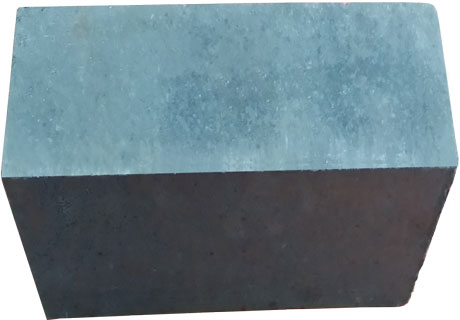
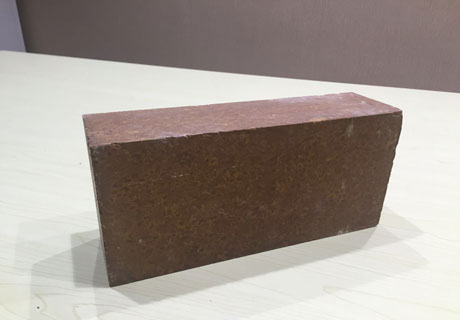
Silicon carbide refractory bricks are special refractory materials produced from silicon carbide (SiC). It has good wear resistance and corrosion resistance, high temperature strength, high thermal conductivity, low linear expansion coefficient, and good thermal shock resistance. Silicon carbide refractory bricks (https://refractoriesmaterials.com/silicon-carbide-brick/) can be classified according to the content of SiC and the type of binding phase.

 Silicon Carbide Brick In RS With Good Performance

What are the Types of Silicon Carbide Refractory Bricks?

The performance of refractory bricks depends to a large extent on the condition of the combined phase. According to the bonding phase, silicon carbide refractory bricks can be divided into: oxide bonding-aluminum silicate, silicon dioxide as the bonding phase; nitride bonding-silicon nitride (Si3N4), silicon oxynitride (Si2ON2) or Long is the binding phase; recrystallization-silicon carbide particles are directly combined by recrystallization; semi-silicon carbide refractory bricks can be divided into many types, such as clinker silicon carbide refractory bricks + high aluminum silicon carbide refractory bricks, Zircon silicon carbide refractory bricks, silicon carbide graphite refractory bricks, mullite silicon carbide refractory bricks and corundum silicon carbide refractory bricks, etc.

2020年8月12日星期三

Main Properties of Refractories for Coke Ovens

RS Silica Bricks For Sale

 (1) Porosity The pores in refractory products include open pores and closed pores. Porosity generally refers to the percentage of the volume of the apparent pores communicating with the atmosphere to the total volume of the product, also known as the apparent porosity. The porosity of the product is smaller, the thermal conductivity is better, and the compressive strength is higher, but the resistance to rapid cold and heat is poor.

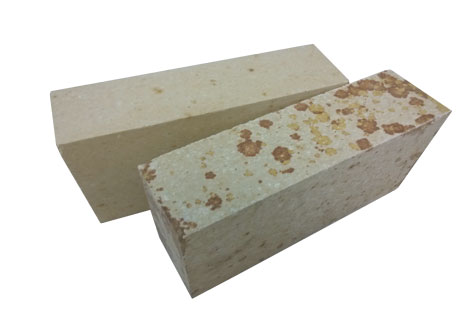
(2) Bulk density and true density Bulk density is the mass number of bricks per cubic meter including all pores, and the brick-like volume when calculating true density only includes rock parts. Since the true density of different crystal forms of quartz is different, the firing situation can be understood through the true density of the brick. A better fired silica brick has a lower true density.

(3) Compressive strength at room temperature The pressure that a product can withstand per unit area at room temperature is called compression strength at room temperature. The structure is uniform and compact, and the product is well-fired and has high compressive strength at room temperature.

(4) Thermal expansion is usually expressed by the average linear expansion rate within a certain temperature range.

(5) Thermal conductivity refers to the performance of refractory products to transfer heat. Expressed by thermal conductivity, its unit is W/(m.℃) bricks with low porosity and dense structure, good thermal conductivity. The thermal conductivity of most refractory products such as silica bricks and clay bricks increases with increasing temperature, but there are also a few refractory products (such as magnesia bricks and silicon carbide) whose thermal conductivity decreases as the temperature rises.

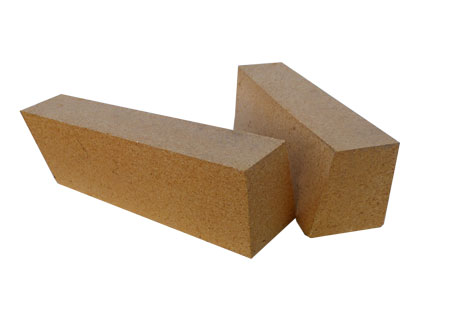
(6) Refractoriness Refractoriness refers to the performance of refractory products to resist softening (melting) at high temperatures, and refers to the temperature at which the top of the refractory cone sample is bent and touches the side of the chassis.

Fire Clay Bricks For Sale In RS

(7) The softening temperature under load indicates the ability of refractory products to resist temperature under a certain load. The load softening temperature is the sample under a pressure of 0.2 MPa and heated at a certain heating rate. As the temperature increases, the sample continuously deforms. The temperature when the height of the sample decreases by 0.6% is the load softening temperature. It is related to the chemical properties of refractory products, the characteristics of crystal structure, the viscosity of the glass phase at a certain temperature, the relative ratio of the crystal phase to the glass phase, the firing temperature and the particle size composition.

(8) High-temperature volume stability refers to the property of irreversible changes in volume of refractory products when they are used for a long time at high temperatures. The volume stability of refractory products is usually expressed by residual expansion (or shrinkage). The specific index is: the refractory product is heated at a certain temperature for a certain period of time, and after natural cooling, the volume change is measured. The percentage of this value to the original volume is called residual expansion (or residual shrinkage).

(9) The ability of thermally stable refractory products to resist sudden changes in temperature without being damaged. The test method is to put half of the sample in the heating furnace, and the other half outside the furnace, heat it to 850℃ for 40 minutes, and then put it in a flowing cooling water tank for rapid cooling. Repeat this process. When it damages the quality of the dropped part It is the number of quenching and quenching when the mass of the original sample is 20%. It is closely related to the expansion coefficient of the product, the unevenness of the internal temperature distribution of the product, and the shape and size of the product.

(10) Corrosion-resistant refractory products are resistant to the chemical and physical effects of molten slag and charge decomposition products at high temperatures. The main factors affecting corrosion resistance are: the chemical composition of the product and the slag, the working temperature, the nature of the decomposition products of the charge, and the density of the product.

2020年8月9日星期日

Refractory Materials Used in Open Furnaces


AZS Refractory Brick For Sale

After the open-hearth furnace adopts oxygen blowing to strengthen smelting measures, the output has doubled and the fuel has been significantly reduced. However, it was accompanied by a sharp increase in the amount of furnace dust in the furnace, severe splashing of molten slag and molten steel, increased furnace temperature, and deterioration of the service conditions of the furnace lining, especially the damage of the furnace roof. In order to meet the needs of open-hearth furnace oxygen-blowing intensified smelting technology, on the one hand, it is to improve the structure of the furnace body, and on the other hand, it is to improve the quality of the furnace lining refractories.

With the adoption of open-hearth intensified smelting technology, the refractories used in open-hearth furnaces have also changed, and refractory materials are developing in the direction of high-grade, such as various direct combined magnesia chrome bricks, recombination and fusion cast magnesia chrome bricks, magnesia alumina spinel Brick etc.

The spray part of the open-hearth furnace lining is also an effective measure to improve the age of the furnace. At present, the semi-dry method and flame spraying have a better effect, and the spraying material is generally magnesium.


2020年8月7日星期五

Refractory Fiber Classification

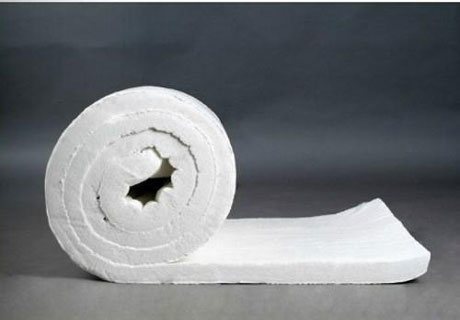
Ceramic Fiber Blanket For Sale In RS

Refractory fiber (also known as ceramic fiber) material is a new type of refractory material developed in the past ten years. It overcomes the inherent brittleness of refractory bricks and unshaped refractory materials, so the scope of application is rapidly expanded. This point has been briefly introduced in the article "Refractory Materials Used in Hydrocarbon Cracking Furnaces" published yesterday. Refractory fiber furnace walls have many advantages: heat resistance, good heat insulation performance, small heat storage, light weight, thinner and lighter furnace walls can be obtained under the same conditions; elasticity, good resistance to mechanical vibration and thermal shock, It also has excellent electrical insulation and sound absorption properties; simple structure, convenient construction, suitable for parts with complex shapes. Disadvantages: poor scour resistance, so convection chambers with soot blowers and chimneys with high flue gas flow rates should not be used. According to experts from Henan Refractory Material Factory, refractory fibers are divided into three categories according to their chemical composition: ordinary aluminum silicate refractory fibers, containing 46%~48% AL2O3, 52%~53% SiO2, operating temperature 1000~1200℃; high alumina refractory Fiber, containing 56%~64% of AL2O3, 35%~44% of SiO2, using temperature of 1200~1400℃; refractory fiber containing chromium aluminum silicate, containing 4% of Cr2O3, using temperature of 1300~1400℃. According to the shape of the product, there are felt, blanket, paper, belt, rope and special-shaped products. Nowadays, the refractory fiber used in the wall of the tube furnace generally contains about, and only the surface directly in contact with the flame is a soft felt with high alumina refractory fiber containing 60% Al203 and methyl cellulose as the binder. It has good heat resistance and thermal insulation properties. In fact, it is more expensive, so it is only used as a refractory layer. Generally, cheap rock wool boards or slag wool boards are used for the insulation layer. There are two types of refractory fiber lining structure: layer lining and stacking.

2020年8月4日星期二

Maintenance of Refractory Castable

Cheap Castable Refractory In RS
Maintenance is one of the key elements that harm the performance indicators of refractory castables, and it is an element that is easily overlooked. Maintenance is to give the fusion agent in the refractory castable one time for setting and hardening, and then to obtain sufficient early compressive strength. Maintenance rules and regulations are related to the type of fusion agent for refractory castables. High-alumina cement solidifies faster, the heat of hydration after forming is mostly released within h, the heating value is concentrated, the internal heat is not easily released, and it is also necessary for the concrete near the surface to solidify. The volatilization of water prevents it from solidifying again, and it is also easy to destroy the refractory castable itself caused by thermal stress. Therefore, maintenance should be carried out immediately after the construction of the refractory castable project. It is decided whether to dismantle the mold according to the detailed situation. During maintenance, the surface of the refractory castable can be covered with wet hemp bales or wet mats and immediately sprinkled with water to maintain moisture.

2020年7月30日星期四

What is Magnesite Brick

Magnesite Brick In RS Kiln Company
Magnesite Brick is a great alkaline refractory material together with magnesia content above 90% and periclase as the particular main crystal phase. Typically, it can be broken into two categories: sintered Magnesite Brick (also called terminated magnesia bricks) and chemically bonded Magnesite Brick (also called unfired Magnesite Brick). Magnesia bricks with higher purity and high shooting temperature are called primary bonded magnesia bricks credited to the direct get in touch with of periclase grains; stones made of fused magnesia as raw materials happen to be called fused combined Magnesite Brick. Magnesite Brick (https://refractoriesmaterials.com/magnesite-bricks/) possess high refractoriness, good weight to alkaline slag, higher starting temperature for conditioning under load, but weak thermal shock resistance. Sintered Magnesite Brick are manufactured of brick magnesia stones. After being crushed, batched, kneaded and shaped, they will are fired in a large temperature of 1550 to be able to 1600? C. The shooting temperature of high-purity items is above 1750? D. Non-cast Magnesite Brick are manufactured by adding appropriate substance binders to magnesia, after that mixing, molding, and drying out. Mainly utilized for steelmaking basic open hearth, electric power furnace bottom and walls, permanent lining of o2 converter, non-ferrous metal smelting furnace, warm tunnel kiln, calcined Magnesite Brick plus cement rotary kiln coating, furnace bottom and wall membrane of heating furnace, Band bricks for regenerator regarding glass kiln.

2020年7月24日星期五

Safety Measures for The Use Involving Graphite Electrodes

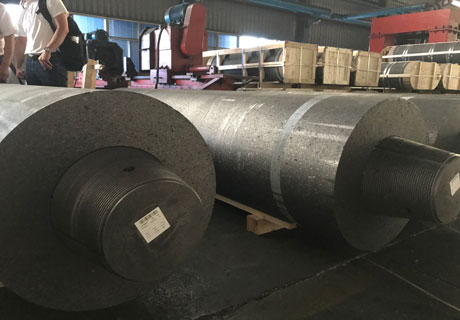
RS Graphite Electrode With Low Price
Graphite electrodes need to pay focus to many points inside the process of make use of, to be able to better make graphite electrodes play a better role. A great graphite electrode manufacturer must understand these kinds of points of attention. The particular following technical manager associated with Rongsheng Graphite Technology Corp., Ltd. will explain in order to you:

Notes on typically the use of graphite electrodes:


  1. Moisture-proof, to avoid rainfall, water wet or moist, must be dried just before use;
  2. Anti-collision should become handled properly, to avoid impact and collision destruction during transportation;
  3. Anti-cracking-When shrinking the electrode with mounting bolts, pay attention to avoid stress bursting;
  4. Anti-breaking graphite is brittle, especially typically the small, narrow and extended electrodes, which can be easy in order to break when external power is applied;
  5. Dustproof gadgets are required during dust-resistant machining to reduce typically the impact within the human entire body and the environment;
  6. Fumes discharge processing is simple to generate a large number associated with smoke screens, plus a venting device is required;
  7. Anti-coking graphite easily deposits carbon dioxide during discharge, and shell out close attention to their processing status during relieve processing.

2020年7月23日星期四

What are Types and Causes Regarding Cracks in Silica Bricks

Similar to most sintered refractory stones, silicon bricks are created by semi-dry methods in addition to fired in tunnel kilns. It is you need to know for the boost in its scrap charge due to cracks by the manufacturing process. Next I will briefly expose the cause of si Let's take a search at the types in order to result in of packet cracks!
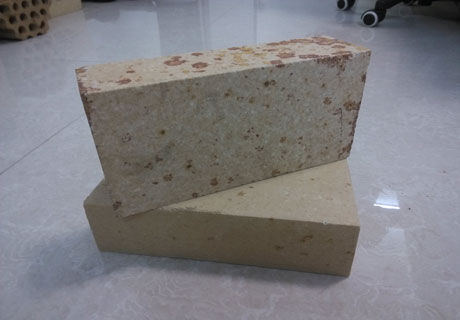
RS Cheap Silica Bricks With Good Quality

 Types and factors of silicon brick fractures


The cracks of silica brick products can end up being divided into surface splits and internal cracks, typically the latter can also be called spalling. Surface cracks are broken down into transverse cracks, longitudinal cracks and network splits. Silica bricks (https://refractoriesmaterials.com/silica-bricks/) are produced simply by using a semi-dry substance press molding method to be able to prepare compact bodies. The particular cracks produced along typically the direction of the packet pressing are transverse splits, and the cracks created perpendicular to the pushing direction in the bricks happen to be vertical cracks. It will be composed of several breaks, that are distributed like a new spider web, that will be, a net-like crack.

Typically, for a standard silica brick, the pressing path of the green human body is usually the width direction. The molding method of silica brick goods is essentially a procedure of making the contaminants in the blank thick and expelling air in order to create a compact physique. After the brick is usually pressed and formed, this has the advantages involving high density, hi-strength, smaller drying shrinkage and shooting shrinkage, and easy control over product size. However, once the press molding process is definitely improperly controlled, layered breaks perpendicular to the pushing direction will be shaped during the pressing procedure. Therefore, the layered fractures inside the silicon packet, or simply laminar splits, will also be longitudinal cracks.

Huge spalling can be recognized when the brick will be just formed or following the brick has dried out. Yet , the tiny spalls inside the bricks can simply be clearly detected right after firing if the silicon stones continue to expand along with the action of cold weather stress during the shooting process. Silicon bricks made up of crack defects, especially spalling, are susceptible to break, which can not end up being used and reduces typically the yield of silicon large rock products. Check more: www.refractoriesmaterials.com/.

2020年6月29日星期一

What Is a Lightweight Refractory Castable

Lightweight refractory castables are made of powder and refractory aggregate, admixture and binder. General provisions: the volume density is less than 1800kg/m, did not make requirements for the refractoriness, or the total porosity is more than 45%, in the specified temperature of the shrinkage rate is less than 1.5% of the castable, called light refractory castable.


Lightweight refractory castable has the following characteristics: small volume density, low thermal conductivity, so it has a good heat insulation performance. There are many varieties of light refractory castables, which are generally classified according to light aggregate varieties, binder types, production methods and performance grades. The most commonly used varieties of light aggregate are light refractory castable such as light sand brick, porous clinker, hollow ball, ceramsite and expanded perlite.

Saving energy is one of the most concerned topics in the world at present. In this general trend, light refractory castable can be developed rapidly, varieties expanded, output increased, quality improved, widely used. In the past, in kilns with temperatures over 1000°C, lightweight refractory castable can only be used as insulation layer, and it is difficult to contact the flame directly. At present, light refractory castables used in flame kilns below 1800°C can be normally produced, and some can be used as working linings.

In the petrochemical industry, metallurgy, electric power and building materials and other industrial sectors, such as furnace and thermal equipment, light refractory castable is widely used, generally used as heat insulation layer, can also be used as its working layer or load-bearing components, have obtained good results and evaluation. In contact with liquid metal or slag, only tundish is covered with insulation board, and good results have been achieved. The performance test of light refractory castable is basically the same as that of heavy refractory castable. One of the differences is that the test of softening temperature under load is 0.1MPa under added load.


It should be pointed out here that with the demand of energy saving of industrial kilns, lightweight refractory castable is sure to get a greater development prospect, its direction is high strength, light weight, low thermal conductivity, low price and easy to use. In addition, light aggregate and binder are generally used in combination, and admixture can develop excellent lightweight refractory castable.

E-mail us:Sales@rongshengrefractory.com


2020年6月22日星期一

What Are Castables Commonly Used in Heating Furnaces

For the refractory good material is widely used is castable and as the application of the occasion of different appliances will also have a different kind of material to choose, and usually heating furnace commonly used refractory castable what.


Refractory castable refers to the mixture composed of refractory aggregate, binder and admixture, which is mixed with water and can be constructed by pouring method. Different from other amorphous refractory, refractory castable has certain setting and hardening time after construction.

If the use of low cement castable is suitable for heating furnace of high temperature, temperate zone and has a moderate solidification rate, good thermal shock resistance, high softening temperature under load, slag resistance, high refractoriness. Mullite castable material can be used in the heating furnace wall, roof and pressing beam and other key parts or used to prefabricate burner bricks.

And the self-leveling castable can be applied to the heating furnace structure is more complex or artificial can not vibrate the position characteristics are the same as the low cement castable.For phosphate castable, it is applied to some parts that are subjected to severe friction and hot air scour to ensure good internal corrosion resistance and a small amount of fiber can be added to increase its toughness. 

Refractory castable is a granular powder material made of refractory material, consisting of a certain amount of binder and water. It has high fluidity and is suitable for casting construction and can be used to harden amorphous refractories without heating. An amorphous refractory castable formed by casting in comparison with other amorphous refractory castables.

Refractory castable uses high binder and moisture content, good fluidity. Therefore, amorphous refractory castable has a wider range of applications, according to the application conditions can be selected raw materials and adhesives. It can be cast directly into a lining, or it can be poured or shaken into prefabricated blocks.

When the castable is mixed with the forced mixer, it is necessary to pay attention to these aspects during the construction. Mixing time and liquid participation should be completed according to the construction instructions. When changing different materials, mixers, hoppers and weighing containers should be cleaned.


Above is the type of pouring material commonly used in heating furnace introduction hope that we can consider in advance and consult manufacturers in time in case of the use of the choose and choose problem.

Email UsSales@refractorycastablecement.com

2020年6月19日星期五

Description of Lightweight Insulating Castable

Introduction to the use of lightweight thermal insulation castables

1. Lightweight insulating castable is suitable for mechanical spraying, pouring or smearing.

2. The light weight casting production has been accurately measured according to the ratio. Considering the timeliness of the bonding agent, the light-weight material and the bonding agent are packaged separately. The light-weight material is packaged in a plastic bag inside the woven bag. The bonding agent is the original packaging. Five bags of light weight materials plus one bag of binder are the smallest batching unit.


3. Transportation and storage

(1) Transportation should depend on the distance between the factory and the construction site. For shorter production (allowable within 500km), you can choose to transport by car, and you can choose to ship by train for longer distances.

(2) Lightweight castables should be placed in a dry and well-ventilated place to avoid direct sunlight or excessively high temperature.

4. The best product validity period is four months.

5. Equipment

(1) Forced mixer (in the case of small usage and limited conditions, manual mixing may be considered).

(2) With complete common sporadic tools (straight ruler, plastering knife, spatula, trolley, bucket), etc.

(3) Use clean domestic water to ensure the normal solidification of the castable (PH value 6.5-7)

(4) Take timely measures to prevent rain and water.

(5) The construction site should have complete safety measures.

6. Mixing

(1) The temperature at the construction site is best at +5-+30°C. If the temperature is too high, cooling measures should be taken, and good insulation measures should be taken during winter construction.

(2) Clean mixing equipment and other tools, and prepare quantitative clean water in strict accordance with the requirements. The water temperature in winter is preferably 15-20°C. The mixer should be placed near water and electricity.

(3) Determine the amount of one-time stirring according to the actual dosage. Pour the mixed light materials first, and then add the binder, dry mix in advance for 2-3 minutes, so that the light materials and the binder are uniformly mixed, and the appearance is basically the same. Then add about 80% of the total water consumption, and finally add water according to the dry and wet procedures of the slurry. Continue to stir for 3-5 minutes. Under the conditions of construction and workability, strictly control the amount of water added, generally 40- 50%, the whole stirring time is controlled within 5-8 minutes. The use time of each well-mixed material should not exceed 30 minutes, and the amount of water should be adjusted according to the construction site and construction method.


7. Construction

When pouring during construction, the thickness of more than 100mm can be formed by manual tamping, and it can be compacted with a wooden stick. The formwork of the supporting template can also be used for construction. It can also be vibrated with a small vibrating rod, but the vibration time should not be too long to avoid Lightweight pellets float up and cause uneven density. When the thickness is thin, it can be applied directly by hand, and the moisture is reduced accordingly to prevent collapse or the generation of holes.

8. Demoulding

Usually, the mold can be demolded after 12 hours after construction (24 hours in winter). The mold must be knocked gently during demolding to prevent brutal demolding and damage to the casting material and the mold. Due to the high moisture content of the lightweight thermal insulation castables, the construction of the wear-resistant refractory layer should be carried out after more than 2 days of natural maintenance (pay attention to ventilation and moisture removal).

Email usSales@refractorycastablecement.com

How To Select Castables When Purchasing

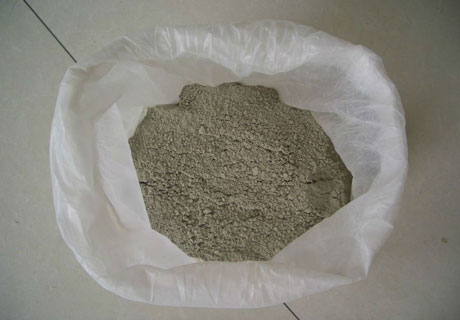
Castables are currently the most widely used amorphous refractory materials in the refractory industry. There are many different products on the market. How do we judge their quality? Let me introduce to you the issues that you should pay attention to in the selection of castables: users using unshaped refractory materials, such as castables, plastics, etc., must first check their useful life. After unpacking the product, be sure to carefully check the factory date on the package. For products that exceed the prescribed period, the performance of the castable will decline.


The particle size, strength and composition of refractory castables have a very important influence on the quality of masonry. Check the particle size and shape, generally by visual method. For example, the size of the knotted induction furnace is preferably diamond-shaped and has sharp corners. The particle size strength can be determined by tapping with a wooden hammer and looking at the crushing situation. Check the size and composition of the particle size and use the screening method. The sieving method is carried out in the laboratory, and it can measure the composition of various particle sizes.

After confirming the raw materials used, this series of castables will go through a series of manufacturing processes to produce suitable castables, and then be cured according to appropriate methods. Finally, the structures will be put into use after proper baking. Because the construction process of the castable is also very important, extra attention should be paid to the amount of water added during the construction of the castable. The castables should contain a certain amount of water, and the specific amount of water added should be analyzed according to the actual situation. For example, calcium aluminate cement can be pre-mixed with a binder to make an aqueous solution and added to it. For those who need to hydrolyze in advance, this method is better.

The hardening speed of cement in refractory castables is closely related to the amount of water added. The most appropriate water-cement ratio should be selected at the peak of the water-cement ratio curve. Not only the type of cement, but also the shape and nature of the particles. During construction, in order to ensure the strength of the castable, the general water-cement ratio is controlled at about 0.4 to 0.6, and the moisture in the mixture is about 5% to 6%.


Of course, it is more important to choose high-quality castables according to the user's specific use. Rongsheng Kiln specializes in producing all kinds of high-temperature, wear-resistant casting materials, plastics, refractory bricks, etc., with preferential prices, independent production, and provides construction services, quality can be used with confidence. You are welcome to visit the company, our company has nearly two decades of technical experience and will recommend suitable products for you according to your needs!

E-mail Us: Sales@rongshengrefractory.com


2020年6月18日星期四

High Strength Akali Resistant Castable Supply

High strength alkali resistant castable adopts low cement combined technology, adding ultrafine powder and high efficiency dispersant, high strength, good thermal stability, impact resistance, erosion resistance, wear resistance, long service life. Excellent material selection, castable refractory up to 1790℃, high temperature performance. Machine mixing, pouring construction, spraying can be machine semi - dry spraying construction is convenient, greatly shorten the construction period, significant economic benefits.


High strength alkali resistant castable needs to be mixed with water into mortar vibration casting, or the production of various types of precast blocks, spraying type can be semi-dry spraying construction. It is widely used in cement kiln preheater lining, pipe lining, cooling machine lining, coal spray gun dressing, front and back kiln, cooling machine and other high-temperature parts. Can be prefabricated into various specifications of the precast blocks, or spraying construction (preheater lining).

Because the flue gas velocity of circulating fluidized bed boiler is high, the erosion of coal ash particles and the erosion of flue gas are serious, the use environment of the lining wear resistant refractory is bad, the operation practice has proved that the traditional refractory has not adapted to the operation needs of circulating fluidized bed boiler. The series of alkali resistant castable material has high density, high strength wear resistance; Higher thermal strength; Excellent resistance to erosion; Good volume stability and erosion resistance at high temperature.

Our production of alkali resistant castable is the use of high silicon and low aluminum good alkali resistant ceramic particles as aggregate and powder, with aluminate cement and admixture prepared alkali resistant castable. When alkali erosion occurs in the process of use, high silicon and low aluminum components react with alkali gas to form high viscosity liquid phase, which is attached to the surface of castable to form enamel-like protective layer, thus preventing alkali erosion and eliminating "alkali crack" phenomenon.


Alkali resistant castables must be kept in dry warehouses. The effective storage period is 12 months for barrels and 4 months for bags. During loading and transportation, there must be protective measures against rain, snow and humidity.

Email UsSales@refractorycastablecement.com